
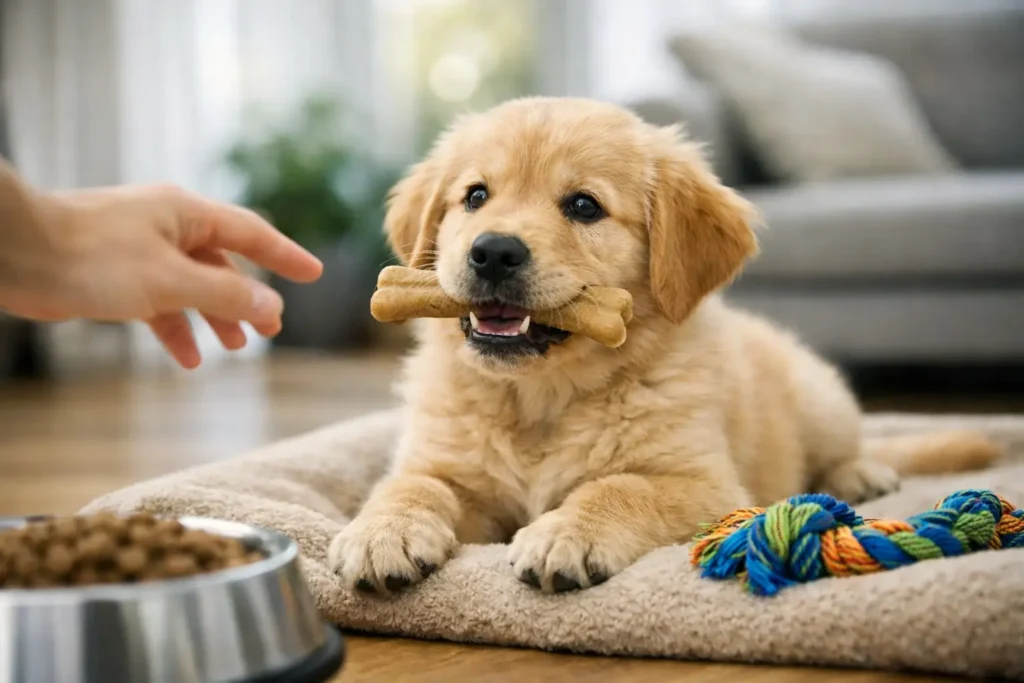
A puppy stiffening over a food bowl, turning away with a chew, or racing off with a sock is not being “dominant.” It is communicating that it is worried about losing something valuable. To prevent resource guarding in puppies, teach one clear lesson from the start: people approaching valuable items make good things happen, and giving something up never means losing out.
This matters in every breed, but it deserves serious attention in a powerful adult dog such as a Rottweiler. A well-bred Rottweiler should have a stable, confident temperament, yet even a sound puppy can develop guarding habits when people repeatedly grab, corner, tease, or punish around food and possessions. Prevention is calmer, safer, and far more effective than trying to correct a rehearsed problem later.
What Resource Guarding Looks Like in a Puppy
Resource guarding is a dog’s effort to keep access to something it values. Food is the obvious example, but puppies may guard treats, chews, toys, stolen household items, a favorite resting place, or even a person.
Early signs can be subtle. A puppy may freeze for a second, hover over an item, eat faster when someone walks by, carry a toy away, show the whites of the eyes, or become unusually still. Growling, lip lifting, snapping, and biting are later warning signs, not acts of defiance.
Do not punish a growl. A growl is useful information that tells you your puppy is uncomfortable. If it is punished, the discomfort does not disappear. The puppy may simply learn not to warn before escalating. Respect the signal, create space, and adjust the training plan.
Start With Predictable Feeding Habits
Feed meals in a quiet, low-traffic location where your puppy can eat without being crowded. This is especially valuable in busy homes with children, other dogs, or frequent visitors. Your goal is not to make your puppy tolerate chaos at the bowl. Your goal is to establish trust.
For the first several meals, simply walk past at a comfortable distance and toss a high-value treat into the bowl, such as a small piece of cooked meat or a training treat your puppy loves. Keep moving. Do not reach into the bowl, touch the puppy, or take the dish away.
Over several days, your puppy should begin to look up happily when you approach because your presence predicts a bonus. Only when that response is relaxed and consistent should you stand closer, drop the treat in, and walk away. This is not a test of obedience. It is a positive association built through repetition.
The old advice to repeatedly remove a puppy’s bowl or put hands in its food can create exactly the concern owners hope to avoid. It teaches the puppy that hands near food are unpredictable. A confident puppy does not need to be challenged while eating.
Give Children a Clear Rule
Children should never approach, pet, hug, move, or reach into a puppy’s bowl while the puppy is eating. They should not take chews or toys directly from the puppy either. This is a household safety rule, not a reflection of whether your puppy is sweet or trustworthy.
Instead, an adult should manage feeding and trade practice. Children can participate safely by tossing a treat from a respectful distance under direct supervision. That teaches the puppy that children also predict good things without placing either child or puppy under pressure.
Teach a Trade Before You Need One
A reliable trade is one of the most useful skills a puppy can learn. It gives you a safe way to recover a dropped medication bottle, a child’s toy, or the sock your puppy grabbed from the laundry basket. More importantly, it changes the puppy’s emotional expectation: releasing an item leads to something better.
Begin with a low-value toy. Let your puppy hold it, then place a more appealing treat at the puppy’s nose and say a simple cue such as “trade.” When the puppy releases the toy, mark the moment with calm praise, give the treat, and then return the toy. Returning the toy is powerful. It shows that letting go does not always mean permanent loss.
Practice for a minute or two at a time, several times each week. As your puppy becomes eager to release the toy, use a slightly more valued item. Do not jump immediately to a prized chew. Progress depends on the puppy staying loose, comfortable, and successful.
If your puppy has something unsafe, do not chase or corner them. Move calmly, offer a high-value trade, and block access to more dangerous items afterward. Management is part of training. Keeping shoes, children’s toys, trash, and medications out of reach prevents a puppy from practicing possession of forbidden items.
Build Comfort Around Chews and Special Toys
Chews can be more valuable than regular toys, so they deserve their own gradual plan. Give your puppy a chew in a calm area. Walk by at a distance and toss a better treat, then continue walking. Repeat until your approach produces a relaxed tail, soft body, and happy glance toward you.
Later, briefly pause near the puppy, deliver the treat, and leave. There is no prize for taking the chew away. If you must remove an item for safety, trade for something exceptional and do not make removal a routine event.
Some owners worry that allowing a puppy to keep a chew encourages possessiveness. In reality, appropriately managed access often helps create security. Puppies that learn their valued items are safe are less likely to feel they must defend them. The exception is a home with multiple dogs or young children who cannot reliably follow boundaries. In that case, use gates, crates, pens, or separate rooms so each dog can enjoy high-value items without conflict.
Prevent Competition Between Dogs
Resource guarding often appears first in multi-dog homes because puppies feel pressure from another dog. Feed dogs separately, pick up bowls when meals are finished, and provide chews behind barriers or in separate spaces. Do not expect dogs to “work it out” over food.
Toys can stay available if all dogs remain relaxed, but reserve truly high-value items for separated time. Watch for hovering, blocking, hard staring, rushing toward another dog’s item, or a puppy carrying a toy away. These behaviors call for more management, not forced sharing.
A Rottweiler puppy may grow quickly, and what looks like minor tension at 12 weeks can become a serious concern when the dog is mature. Establishing orderly routines early protects every dog in the home.
Avoid These Common Mistakes
Well-meaning owners can unintentionally make guarding worse. Avoid these four habits:
- Taking food, toys, or chews just to prove you can.
- Chasing a puppy that has stolen an item.
- Scolding, pinning, or physically correcting a growl.
- Asking children to practice taking possessions from the puppy.
These methods may suppress behavior in the moment, but they do not build trust. They also create a trade-off that is not worth making: an owner may gain temporary control while increasing the puppy’s anxiety around valued possessions.
When to Get Professional Help
A puppy that freezes, growls, snaps, or bites around food or objects needs prompt, skilled guidance. The earlier you address it, the better. Choose a qualified trainer or behavior professional who uses reward-based behavior modification and has experience with guarding in large breeds.
Get help immediately if there are children in the home, if the puppy guards from another dog, if a bite has occurred, or if the behavior is becoming more intense. Do not conduct confrontational “tests” to see how serious it is. A professional can observe body language, identify triggers, and create a plan that fits your household.
Thoughtful breeding, early socialization, and a stable home routine all matter. At King Rottweilers, we believe the right family match and continued owner education are part of responsible placement, particularly for a breed known for intelligence, loyalty, and substantial strength. Still, no pedigree replaces daily training and clear household boundaries.
Your puppy does not need to surrender every treasure on demand to become a respectful family dog. They need to learn that you are fair, predictable, and worth trusting. Build that trust around every bowl, chew, and toy now, and you give your puppy a safer foundation for the powerful, steady companion they are meant to become.